Digital Marketing
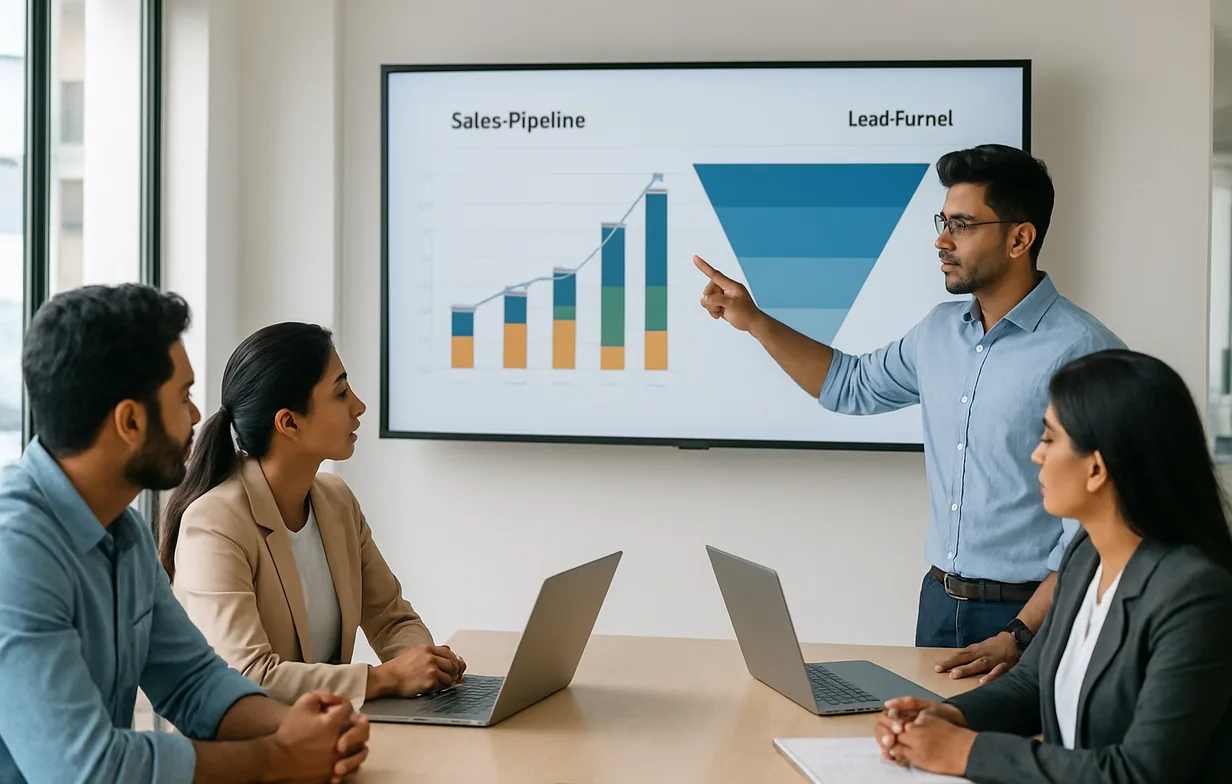
If your sales team is busy but the pipeline still looks thin, the problem is rarely effort. It is targeting. Surveys put it bluntly: 61% of marketers say generating quality leads is their biggest challenge, and roughly 79% of marketing leads never convert into a sale. The fix is not more cold calls. Picking the right lead generation company in India — or building the same discipline in-house — means engaging entire buying groups, qualifying earlier, and following a structured digital funnel instead of chasing one-off enquiries.
This guide covers what actually moves the needle for Indian B2B firms in 2026: how the buyer has changed, the channels that compound, the numbers to expect, and the mistakes that quietly drain budgets.
A decade ago, Indian B2B ran on referrals, trade shows, cold calls, and the personal network of the founder. Those still matter. But today's buyer researches long before they speak to a salesperson. They compare vendors, read blogs, scan LinkedIn profiles, watch demo videos, and look for proof — case studies, reviews, GST-registered credentials — before they raise a single enquiry.
Two structural shifts make this harder than it looks. First, the buying group has grown: a typical B2B purchase now involves 6 to 10 stakeholders across finance, IT, operations, and procurement. Win over the plant head and lose the CFO, and the deal stalls. Second, the sales cycle has stretched. In sectors like manufacturing, SaaS, logistics, industrial products, healthcare, education, and real estate, a serious deal can take three to nine months from first touch to signature. Lead generation, then, is not about collecting contacts. It is about attracting the right decision-makers, educating them over time, and building enough credibility that the enquiry feels low-risk.
Volume does not fix bad targeting, yet most teams behave as if it does. Before any campaign goes live, write down a precise Ideal Customer Profile (ICP): industry, company size (say 50–500 employees), revenue band, region (Delhi NCR, Mumbai, Bengaluru, or pan-India), and the named roles inside the buying group. Then map intent signals — a company hiring for a role you serve, a recent funding round, an expansion announcement, or repeat visits to your pricing page.
This single step separates the firms that waste money from the ones that compound it. A tightly defined ICP of 800 right-fit accounts will out-perform a list of 20,000 scraped contacts every time, because every downstream rupee — ad spend, SDR time, content — gets aimed at people who can actually buy.
Inbound is the slow-compounding asset. SEO and gated content take 6 to 12 months to mature, but once they rank, they generate qualified pipeline at a fraction of the cost of outbound. The mechanics are simple and unglamorous:
If paid traffic is part of your mix, the landing experience matters as much as the ad. A specialist performance marketing company in Delhi will tie ad copy, landing page, and lead form into one measurable funnel — so you know cost-per-lead by channel rather than guessing.
Outbound is still the fastest route to pipeline — but only when it is multichannel and personalised. The data is stark: sequences that combine email, LinkedIn, and calls hit 40%+ reply rates, versus 8–12% for single-channel email alone. The channel mix is the multiplier, not the volume.
For India specifically, LinkedIn has become the default B2B prospecting ground for SaaS, professional services, and tech-led manufacturing, while WhatsApp Business and phone still carry weight in traditional industrial and SME segments. A practical cadence over two to three weeks looks like: a personalised LinkedIn connection, a short value-led email, a comment on the prospect's recent post, a second email with a relevant case study, and a call. Generic blasts no longer clear inbox filters or human attention — the personalised, account-by-account approach is what books meetings.
AI's real value in B2B lead generation is not blasting more emails — it is qualifying and personalising at scale. Lead-scoring models can rank inbound contacts 24/7 against your ICP and intent signals, so SDRs spend their hours on the 20% of leads most likely to convert. Generative tools can draft the first version of hyper-personalised outreach in seconds, which a human then edits. Used this way, a two-person team can cover the ground that used to need five.
Set expectations with numbers. Inbound SEO and content typically take 6–12 months to produce steady organic leads, then keep paying off. Paid search and paid social produce leads in week one but stop the day you stop spending. A blended programme — inbound building the base, outbound and paid filling near-term pipeline — is what creates predictability.
For a mid-market Indian B2B firm, a realistic monthly retainer for a full-funnel programme runs roughly ₹60,000 to ₹2,50,000 depending on scope, with paid media budget on top. Judge any provider on cost-per-qualified-lead and pipeline value, not on vanity metrics like impressions or raw lead count.
The firms winning at B2B lead generation in India are not the ones shouting loudest. They are the ones with a tight ICP, an inbound base that compounds, a personalised multichannel outbound motion, and a CRM that ensures no lead dies after one touch. If you want that built and measured end to end, talk to our performance marketing team in Delhi and we will map a funnel to your sector and budget.
FAQs
Fill out the form or call us — let’s find where your next growth comes from.
9659 634 634 [email protected]Free Growth Audit
See exactly where your traffic, leads and ROAS are leaking — and how to fix it. A senior Nurotech strategist reviews your website, SEO and ads. Free, no obligation.
No spam. We reply within 1 business day.