

How Nurotech Is Changing Digital Marketing Through Transparency and Results
You are informed by a digital marketing company that your business will be transformed after you have just signed up with them, that leads will be pouring in, and that sales would go up on the moon. But after three months have passed, you are still watching imprecise reports filled with terms and metrics that sound impressive, your phone is still not busy with calls, there are no sales increases, and when you put a question that is specific, the answer you get is still general. Does this situation seem like yours?
Unfortunately, this is the sad truth for a large number of businesses that want to grow their online presence. And it’s not because digital marketing is still ineffective after all, but simply because the majority of the agencies have their hands tied to their promises, confusion, and clamor rather than results.
The very same annoyance was the reason for Nurotech’s inception, a digital marketing agency that is performance-oriented and practices a completely different way to do business: being transparent, showing measurable results, and having open conversations. Nurotech, being a part of Yogya Infomedia Limited, was established based on a very simple assumption that the success of digital marketing would not be determined by the methods of estimation, overpromising, or expensive services that consume the budget but do not provide any return.
What Makes Nurotech Different
Walk into most digital marketing agencies, and you’ll encounter familiar patterns. Either they’re expensive boutique firms charging premium rates for services small businesses can’t afford, or they’re budget operations using cookie-cutter templates that don’t account for your specific business needs. Nurotech exists in a different category entirely.
Marketing-wise, Nurotech only achieves submission to digital marketing, but the mere fact omits what makes the organization stand out.
- Transparency as standard practice — There are live dashboards that provide a comprehensive view of the flow of money and its associated results. No one can cover themselves with unclear measurements or complicated words. Performance data can be viewed: leads created, lead cost, conversion rates, ROI.
- Data-backed decision making — The strategies are not based on what was previously successful for others, or what is “in” this month. Each recommendation is based on a thorough examination of your particular business data, your market, your competition, and your objectives.
- Performance focus over vanity metrics — Nurotech doesn’t celebrate thousands of impressions or likes if they’re not translating to business outcomes. The focus stays on metrics that matter: qualified leads, sales, revenue growth, actual return on investment.
- Complete service integration — From SEO services that improve organic visibility to Google ads agency work that drives immediate traffic, from website designing company capabilities to e-commerce development company expertise—everything works together as a cohesive system rather than disconnected services.
The philosophy behind Nurotech is refreshingly straightforward: create digital growth systems that generate consistent, measurable results while maintaining complete transparency about what’s working and what isn’t.
The Problem Nobody Was Solving
Here’s what most digital marketing companies won’t openly discuss: the vast majority of small and medium businesses waste money on marketing that doesn’t deliver proportional returns. Not because digital marketing doesn’t work, but because agencies often prioritize their own interests over client results.
Consider the typical encounters that companies have with marketing agencies:
- Uncertain charges and concealed costs are the constant source of irritation for entrepreneurs. You agree on one price, later on, find out that there are extra charges for essential services. Or the project is getting bigger and the cost increases at the same time, but this wasn’t properly explained at the beginning.
- Inconsistent lead quality undermines campaign value. An agency might generate leads, but when you call them, they’re not actually interested, can’t afford your services, or are completely outside your service area. Quantity without quality wastes your team’s time.
- Poor ROI with no accountability damages trust. You’re spending thousands monthly but can’t clearly connect that spending to revenue increases. When you question results, the agency blames your industry, your website, your products—never their strategies.
- Communication blackouts leave you wondering what’s actually happening. Reports arrive late or not at all. When you have questions, responses are slow or vague. You feel like you’re bothering them by asking about campaigns you’re paying for.
Nurotech was established with the intent to address these basic issues by utilizing a different operational model:
- Absolute cost transparency — The cost is presented clearly from the very beginning. There are no hidden costs, no unexpected charges. You are fully aware of what you are paying for and the reason behind it.
- Qualified lead focus — The systems are created to not just pull in any person who clicks the advertisement but to pull in those who are genuinely interested and capable of purchasing your products or services.
- Performance dashboards — You have the access to the campaign data in real-time. You can monitor performance at any time you wish, not just when monthly reports are sent out.
- Proactive communication — You will get periodic updates, prompt replies, and open discussions about what is working and what requires changes.
The outcome is a partnership model in which there is a true alignment of agency and client success, not merely a claim.
Who Is Nurotech For?
Nurotech isn’t trying to serve every business that exists. The company focuses specifically on businesses serious about digital growth and willing to invest appropriately to achieve it.
Small to medium-sized enterprises that are prepared to grow are the ones who create the main audience. In other words, these are businesses that have established their product or service locally or in some restricted markets and now require digital strategies for further reach:
- Around the globe, law firms, medical practices, home services, and consulting firms, and others requiring continuous qualified leads as their source of revenue will be service businesses.
- Businesses that want to conquer their local market through local SEO and targeted advertising are classified as local.
- B2B organizations that require lead generation systems that will help them in connecting with the decision-makers at the targeted companies are examples of such businesses.
E-commerce brands at various stages benefit from Nurotech’s specialized e-commerce development company and performance marketing expertise:
- New online stores needing everything from ecommerce website designing company services to set up their platform, to initial marketing strategies that drive first sales.
- Growing e-commerce businesses looking to scale profitably through optimized Google ads, Meta campaigns, and conversion rate optimization.
- Established brands wanting to improve ROAS (return on ad spend) through better targeting, automation, and funnel optimization.
Companies burned by previous agencies often find their way to Nurotech after frustrating experiences elsewhere:
- Seeking transparency they didn’t get from previous partners. Want to see exactly where money goes and what results it generates.
- Needing accountability with partners who take responsibility for results rather than making excuses.
- Wanting education about what’s actually happening with their marketing rather than being kept in the dark.
Businesses across multiple industries have worked with Nurotech successfully:
- Education — Driving enrollments for coaching institutes, online courses, and educational programs.
- Real estate — Generating qualified buyer and seller leads for developers and brokerages.
- Manufacturing — Connecting B2B manufacturers with distributors and bulk buyers.
- Wellness and healthcare — Filling appointment calendars for clinics, gyms, and wellness centers.
- SaaS companies — Acquiring trial users and converting them to paid subscribers
The common thread: businesses that understand digital marketing is an investment requiring proper strategy, not a quick expense that magically solves everything overnight.
How Nurotech Actually Works
Understanding Nurotech’s approach helps explain why results differ from typical agency experiences. The process combines strategic thinking, technical execution, and continuous optimization.
Strategy development starts with understanding rather than assuming:
- Business goals clarification — What does success actually look like for your business? More leads? Higher average order value? Expansion into new markets? Strategies get built around real objectives, not generic “increase traffic” goals.
- Market and competitor analysis — Who else is competing for your customers’ attention? What strategies are they using? Where are the gaps and opportunities? Understanding the competitive landscape shapes positioning.
- Customer research — Who actually buys your products or services? What problems are they trying to solve? What language do they use? Where do they spend time online? Campaigns work better when based on actual customer insights rather than assumptions.
Implementation focuses on integrated systems rather than isolated tactics:
- Website foundation — As a website development company and website designing company, Nurotech ensures sites are fast, mobile-responsive, and conversion-optimized before driving traffic to them. No point paying for ads if your website doesn’t convert visitors.
- SEO services for long-term organic growth — Customized frameworks with month-on-month ranking analysis. Focus on keywords that actually drive business, not just traffic. Technical optimization, content creation, and link building all working together.
- Paid advertising through multiple channels — Google ads agency expertise for search, display, and YouTube campaigns. Meta advertising for Facebook and Instagram. Each platform used strategically based on where target customers actually are.
- Automation and efficiency — WhatsApp automation for better customer engagement. Chatbots answering common questions immediately. Email sequences nurturing leads automatically. Technology handling repetitive tasks so humans focus on strategy and optimization.
- Measurement and optimization happen continuously:
- Performance dashboards tracking real-time data — Lead volume, cost per lead, conversion rates, revenue attribution. Everything visible and measurable.
- Regular analysis and adjustment — What’s working gets scaled. What’s underperforming gets fixed or paused. No “set and forget”—constant refinement based on data.
- Transparent reporting — Clear communication about results, challenges, and plans. No hiding bad news or inflating good news.
- This comprehensive approach—from strategy through implementation to ongoing optimization—treats digital marketing as a system rather than a collection of disconnected services.
Complete Service Offering
Nurotech’s range covers everything businesses need for digital growth. Understanding each service helps you see how they work together.
SEO company services build long-term organic visibility:
- Local SEO for businesses serving specific geographic areas. Optimizing Google Business Profile, local citations, location-based keywords to dominate local search results.
- National SEO for businesses serving entire countries. Competing for broader keywords, building authority across wider topics, creating content that ranks nationally.
- International SEO for businesses operating across multiple countries. Handling language variations, regional search engines, international targeting.
PPC company capabilities drive immediate qualified traffic:
- Google Ads management across search, display, shopping, and YouTube campaigns. Keyword research, ad creation, bid optimization, landing page alignment.
- Meta advertising on Facebook and Instagram. Audience targeting, creative testing, funnel optimization from awareness through conversion.
- Performance marketing focused purely on measurable outcomes. Campaigns structured around cost per lead or cost per acquisition rather than just impressions and clicks.
Lead generation company specialization creates systems for consistent inquiry flow:
- High-performing landing pages designed specifically for conversion. Clear value propositions, compelling offers, streamlined forms, social proof.
- Multi-step funnels that warm up prospects before asking for high commitment. Lead magnets, email sequences, retargeting campaigns working together.
- Qualification systems ensuring leads meet criteria before reaching sales teams. Forms that gather necessary information, automation that scores and routes leads appropriately.
Website designing company and website development company services create digital foundations:
- Responsive design that works perfectly on desktop, tablet, and mobile devices. No broken layouts or functionality on different screen sizes.
- Conversion-focused structure guiding visitors toward desired actions. Clear navigation, strategic call-to-action placement, friction reduction throughout the user journey.
- Speed optimization ensuring fast load times that keep visitors engaged and satisfy search engine requirements.
Ecommerce website designing company and e-commerce development company expertise specifically serves online stores:
- Platform selection and setup — Choosing between WooCommerce, Shopify, Magento, or custom solutions based on specific business needs.
- Product catalog optimization — Compelling product descriptions, high-quality images, clear pricing, easy navigation.
- Checkout optimization — Streamlined purchase process minimizing cart abandonment. Multiple payment options, guest checkout, clear shipping informatio
Social media marketing and management builds brand presence and engagement:
- Content strategy and creation aligned with business goals. Mix of promotional, educational, and entertaining content.
- Community management responding to comments, messages, and mentions professionally and promptly.
- Paid social campaigns amplifying reach beyond organic followers to target audiences likely to convert.
Each service can work independently, but real power comes from integration—SEO driving organic traffic, PPC filling immediate gaps, landing pages converting traffic from all sources, automation nurturing leads, social media building brand awareness that supports all other channels.
Why Choose Nurotech Over Alternatives
The digital marketing company has countless agencies, freelancers, and in-house options. What makes Nurotech worth consideration over alternatives?
Transparency versus black-box operations:
- Most agencies keep clients in the dark about actual campaign performance, hiding behind confusing reports and industry jargon.
- Nurotech provides real-time dashboards showing exactly what’s happening. Clear communication about what’s working, what isn’t, and why.
Performance focus versus vanity metrics:
- Typical agencies celebrate impressions, reach, and clicks—metrics that look impressive but don’t necessarily drive business results.
- Nurotech measures what actually matters: qualified leads, cost per acquisition, conversion rates, revenue attribution. If metrics don’t connect to business outcomes, they’re not celebrated.
Customized strategies versus templates:
- Many agencies apply the same playbook to every client regardless of industry, goals, or market conditions.
- Nurotech develops industry-specific strategies based on actual business research, competitor analysis, and customer insights.
Integrated approach versus siloed services:
- Conventional agencies might excel at one thing (SEO or PPC) but lack capabilities in other areas, forcing you to work with multiple vendors.
- Nurotech offers complete service integration under one roof—web development, SEO, paid ads, automation, social media—all working together cohesively.
Reasonable pricing versus inflated costs:
- Premium agencies charge rates small and medium businesses simply can’t afford, making professional digital marketing seem inaccessible.
- Nurotech maintains reasonable, transparent pricing. Quality service doesn’t require luxury-level costs when operations are efficient and honest.
Accountability versus excuse-making:
- Some agencies blame poor results on your industry, your product, your website, market conditions—anything except their strategies.
- Nurotech takes responsibility for results. If something isn’t working, the conversation is about what to adjust, not who to blame.
The combination creates a partnership model fundamentally different from typical agency relationships.
The Nurotech Vision for Digital Marketing
After understanding services, approach, and results, what’s the bigger picture? Where is Nurotech headed and why does it matter?
The company’s vision is to become India’s most trusted and reliable digital service company by 2027. That’s not about being biggest or most expensive—it’s about trust and reliability.
- Trust comes from transparency: When clients can see exactly what’s happening with their marketing, understand why decisions are made, and verify results themselves, trust builds naturally.
- Reliability comes from consistency: Delivering what’s promised, meeting deadlines, responding promptly, maintaining quality regardless of account size.
- The mission guides operations: Deliver top-quality digital solutions at reasonable costs while maintaining complete transparency, responsibility, and measurable results.
This isn’t marketing language—it’s the operational framework shaping how Nurotech works with every client.
Values in practice:
- Integrity — Honest communication even when news isn’t good. No inflating results or hiding problems.
- Creativity — Finding innovative solutions to unique business challenges rather than forcing standard approaches.
- Accountability — Taking responsibility for outcomes and working to improve them rather than deflecting blame.
- Customer success — Measuring Nurotech’s success by client results, not just revenue or client count.
These values aren’t poster-board statements. They shape decisions about which clients to accept, how to structure campaigns, when to recommend pausing underperforming strategies, and how to communicate throughout partnerships.
The Digital Marketing Landscape Nurotech Navigates
Understanding industry context helps appreciate what Nurotech offers. The digital marketing world is complex, constantly changing, and often confusing for businesses trying to grow online.
Constantly changing circumstances are part of the life of a digital marketing agency. Google changes the algorithms. Meta- ads policy changes. New players in the game. What was super effective a year ago might not be effective at all now. Agencies have to be in sync with these changes all the time and change their strategies accordingly. Nurotech’s dedication to constant learning and adapting makes sure the strategies stay in step with the market.
The competition becomes tougher among the different sectors. More and more companies realize the significance of digital marketing and thus the competition for the same audience’s attention gets tougher. To be successful in this game, one needs to have increasingly complex strategies, better targeting, more attractive creative and constant optimization.
Nothing is more difficult than keeping the customer satisfied. The customer usually has a problem. One wants a website to load right away, another wants information that is difficult to find, and the third one wants to buy through frictionless process. To meet these demands one needs to have technical capability, user experience knowledge, and a high level of quality.
Data and privacy rules have a negative impact on targeting. The demise of cookies, privacy notifications, and the introduction of new laws are limiting some traditional tracking and targeting methods. A successful marketing strategy today must be a combination of personalized services and privacy- respecting practices.
Attribution is turning into a challenge. It is very rare that a customer decides to buy a product after having one contact with it. He may come across the advertisement, visit the site, leave it, see the advertisement again, search for the brand, read opinions, and conclude buying. It requires advanced analysis to properly attribute the credit and unravel the customer journey.
Nurotech navigates this complexity daily, keeping strategies effective as conditions change while maintaining the transparency and results focus that defines the company.
The Nurotech Difference for Growing Businesses
If someone’s looking for a digital marketing company that gives true value for its money, or a performance marketing company that promises and delivers results by setting quantitative targets, a lead generation company that brings quality prospects, an SEO company that improves the organic visibility of a site, a PPC company that operates the ad spend effectively, a web design company that creates a conversion-oriented site, or an e-commerce development company that builds successful online stores it follows some business with partnership experience and true mutual benefit-Nurotech.
The company cannot promise miracles or overnight transformation. Instead, it offers something even more valuable: systematic digital growth, transparent strategies, data-backed decisions and execution, and the resultant measurability of business growth.
That is the Nurotech difference-Really effective, honest, professional digital marketing.
The Complete Guide to Digital Marketing in 2026: Advance Strategies, Tools, and AI implementations
The complete guide to digital marketing in 2026 isn’t what you think it is.
Most marketers are still playing by 2020 rules.
And they’re wondering why their campaigns feel like shouting into the void.
Here’s the truth: digital marketing has fundamentally changed.
AI isn’t coming to transform how we work—it’s already here.
Your competitors are using it right now to gain unfair advantages.
And if you’re not adapting, you’re already behind.
I’ve spent the past three years testing every major AI marketing tool on the market.
I’ve run campaigns for brands doing 7 and 8 figures.
And I’ve learned what actually works versus what’s just shiny object syndrome.
This guide isn’t theory.
It’s the exact playbook I wish someone had given me when ChatGPT first launched.
Let’s get into it.
Why Traditional Digital Marketing Strategies Are Dead (And What’s Replacing Them)
Remember when SEO meant stuffing keywords into your content?
When social media marketing was just posting three times a week?
When Internet Marketing was blasting the same message to everyone?
Those days are gone.
The shift happened faster than most people realised.
Google now shows AI Overviews on billions of searches every month.
More than 13% of all search results now include AI-generated answers.
And by the end of 2027, LLM traffic is predicted to overtake traditional Google search entirely.
I saw this coming in 2024.
We noticed something strange in our analytics.
Traffic coming from AI tools like ChatGPT and perplexity platforms shot upwards by 800% every year.
Traditional organic search had reached a plateau.
Signs were being indicated.
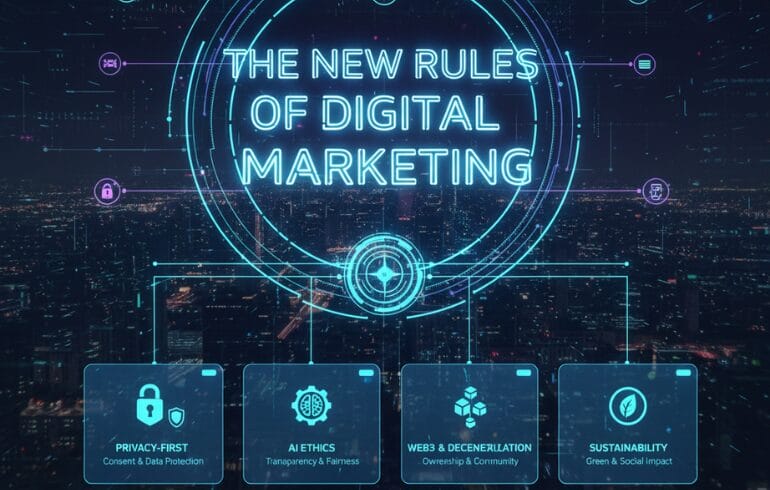
The latest changes in digital marketing bring forth new guidelines:
- AI engines should be the primary target for your Seo optimization, not merely search engines
- Content delivered to machines and humans should not have separate structures
- It is not enough to look at backlinks only; brand references are also important
- To exist as a brand, you have to be present on multiple platforms
- Automating processes is not about taking over human jobs; it is about giving a louder voice to the successful things
I will guide you through the exact process of how to find your way around this new environment.
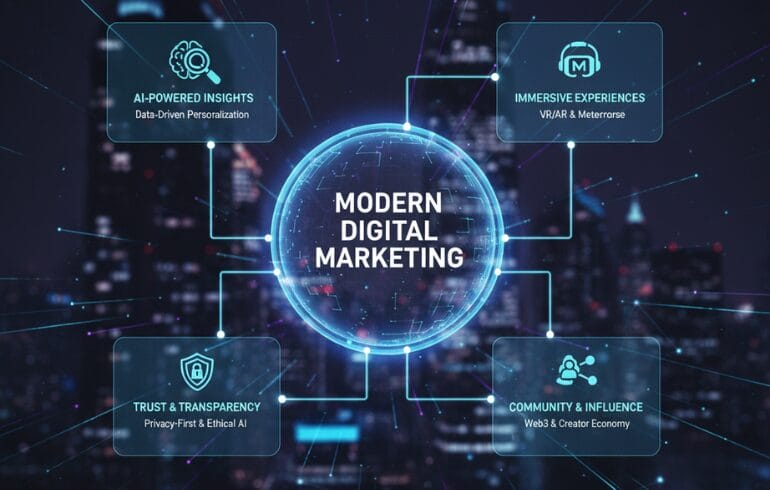
Understanding the Modern Digital Marketing Landscape
In 2026, digital marketing has transcended the limit of one channel.
It involves harmonizing various touch-points amidst an even more fractured landscape.
Your clients have not moved only to Google.
They have started to consult ChatGPT for advice.
They come to know about brands via TikTok and Instagram Reels.
They are scanning Reddit discussions first before they decide to buy.
They are doing voice searches on their mobile phones whilst strolling.
This is how the present-day customer journey goes:
- Mobile voice search: “Best project management software for small teams”.
- AI chatbot comparison: Asking ChatGPT to make a comparison of the top options.
- YouTube research: Viewing demo videos and reviews.
- Reddit validation: Finding out what actual users are saying.
- Social proof searching: Checking content on Instagram and LinkedIn.
- Google search: Last comparison before buying.
- Email follow-up: Registering for trials and getting the automated sequences.
The different strategies are required for each of the touchpoints.
Each channel has its unique algorithm, audience behavior, and content requirements.
Most marketers attempt to be everywhere and finally end up being nowhere.
What works is the following:
Choose 3-4 platforms where your intended customers really spend time.
Know them completely before going further.
Employ AI automation to increase the activity that is working without exhausting your staff.
I experienced this by taking the hard way of covering eight platforms and hence getting burnt out.
Now I focus on three: SEO-optimised content, AI visibility, and email marketing.
Revenue tripled. Stress halved.
The AI Marketing Revolution: Tools That Actually Matter
I’ve tested over 50 AI marketing tools in the past two years.
Most of them are garbage wrapped in fancy interfaces.
But some are genuinely game-changing.
Let me show you the ones I actually use every single day.
GumLoop
Gumloop is what happens when Zapier and ChatGPT have a baby.
It’s an AI automation platform that lets you connect large language models to your actual workflows.
No coding required.
I discovered it when I was drowning in repetitive tasks at Webflow.
Content audits, Competitive research, Social media scheduling, or Data analysis.
All of it was eating up hours every week.

Here’s what makes Gumloop different:
- Built-in access to premium LLMs (GPT-4, Claude, Grok) without needing API keys
- Beautiful, intuitive interface that doesn’t feel like enterprise software
- Powerful web scraping that can pull data from any site
- Continuous AI agents that run in the background
Teams at Shopify, Instacart, and Airbnb are using it internally.
That tells you everything you need to know.
Real-world use case:
I built a Gumloop workflow that monitors competitor blog posts.
Every morning, it scrapes their latest content.
Analyses their keyword targeting.
Identifies content gaps we could fill.
And delivers a formatted report to my Slack channel.
What used to take three hours now takes three minutes.

ChatGPT and Claude: Your AI Content Co-Pilots
Everyone knows about ChatGPT.
But most people are using it wrong.
They’re typing one-off prompts and expecting magic.
That’s not how you get results.
Let me show you the exact way I make use of AI for generating content:
- Compose precise brand voice guidelines and provide them to the AI
- Establish a collection of prompts for various content forms
- Utilize dialogue logs to keep the context during multiple sessions
- Merge various AI platforms in the process (ChatGPT for brainstorming, Claude for extensive writing)
- Claude Artifacts is one of the most useful tools for making reports and presentations.
I rely on it to produce client outputs that would otherwise require several days.
Important caveat:
AI-generated content needs human editing.
Always.
No exceptions.
Tools like Originality AI help detect purely AI-written content.
Google’s algorithms are getting better at spotting lazy AI usage.
Your goal isn’t to replace writers—it’s to make them 10x more productive.

Surfer SEO and Semrush: The SEO Foundation
Search engine optimisation is still the foundation of Web Marketing.
However, the shift in the rules has been very drastic.
No longer are keyword density and exact-match phrases factors to consider.
What is important now are semantic relevance, content structure, and relationships between entities.
Surfer SEO is the best tool for:
- Content optimization as you write in real-time
- Analytical comparisons revealing the exact rankings
- Recommendations for the content structure based on the best performers
- Keyword grouping for topic authority
On the other hand, Semrush provides the data layer:
- Complete keyword research in more than 140 countries
- Competitor intelligence revealing their whole content strategy
- Backlink analysis and discovering link-building opportunities
- Tracking your position in both traditional and AI search results
I apply both tools in combination.
Semrush for investigation and planning.
Surfer for performing and optimizing.
The Semrush AI SEO Toolkit has now incorporated the monitoring of the visibility of your brand on platforms such as ChatGPT, Claude and other LLMs.
The year 2026 will definitely reveal your actual digital footprint and this is therefore essential.
Content at Scale and Jasper: AI-Powered Content Generation
Brandwell (formerly Content at Scale) is among the generators of very best AI content that I have ever tried.
When you check it with Originality AI, it usually gets 70%+ human-written score.
That’s a great achievement for the text written by AI.
The system takes care of:
- Generation of an entire blog post with a proper outline
- SEO optimization included in the writing process
- Modification of the brand’s voice according to your illustrations
- Support for multiple languages for international campaigns
Jasper AI is more versatile, but it demands more assistance.
It does great job in shorter content forms: email sequences, ad copy, social media posts.
The secret is to blend these tools with human skills.
AI is to generate the primary version.
Humans are to bring in character, correctness, and thoughtful planning.

Notion AI: The Multiplier of Productivity
Notion AI changed the way I handle projects and documentation.
Pose it any questions about your workspace and it will instantly bring up the related information.
Concrete uses of it:
- Meeting notes and action items are generated automatically
- From different pieces of information, project briefs are being created
- Making documentation clear and easy to understand
- With the context of past projects, brainstorming campaign ideas
The connection is so smooth that it is like you are using the same tool that you already have.
No context-switching. No copy-pasting between platforms.
It costs £8-10 per user per month depending on billing frequency.
Worth every penny for the time savings alone.
Mastering Performance Marketing in 2026
Performance marketing is where AI makes the biggest immediate impact.
Because everything is measurable.
Every click. Every conversion. Every rupee spent.
The core principle hasn’t changed.
You only pay for results.
But the execution has evolved dramatically.
Let’s understand the Modern Performance Marketing Channels
Old school performance marketing was about paid search, and display ads.
In 2026, things are much messier.
Primary performance marketing channels:
- Google Ads (search, display, shopping, YouTube)
- Meta Ads (Facebook, Instagram,Messenger)
- LinkedIn Ads (More B2B and at a higher CPC)
- TikTok Ads (generations Z and younger, creative-first)
- Native (Taboola, Outbrain for content discovery)
- Affiliate marketing (performance-based partnerships)
- Programmatic display – Automated ad buying across the network
Different creative and bidding strategies are needed on each channel.
What most marketers do wrong is treat all of them equally.
Google vs Meta: The Lead Generation Breakdown
I did this comparison for an SaaS client in the last quarter.
The results surprised me.
Google Ads performance:
- Average CPC: £2.69 across all industries (£1-10 along the spectrum)
- Search % CTR: 3.17%
- Average display CTR: 0.46%
- Average cost per lead: £40.74
Montly ad spend: expected to be anything between £3,000 – £30,000. (varies from one industry/competition to another)
Meta Ads performance:
- Average CPC: £0.45-3.77
- Higher response rates because of social setting
- Good for brand awareness and consideration stages
- Lower CPM, but it takes more of it
The strategic difference:
Google captures active high-intent searchers that are seeking solutions.
By intercepting users with what is important to them, Meta disrupts advertising.
Both options are viable. None of them is better in an absolute way.
Here is my decision-making model:
Use Google in the following situations:
- There is a definite demand for your product in the search queries
- The additional cost per click (CPC) relates to the purchase intent that is almost instant
- You focus on commercial/transactional keywords with purchase intent
Use Meta for:
- Raising awareness of new products or categories
- Picking out precise age groups or interest groups
- Running remarketing campaigns targeting already very warm audiences
- Working with lower cost per acquisitions (CPAs) and nurturing longer sales cycles
The wisest strategy? Use both channels.
let Google get the demand that you have created through Meta.
Measure the customer journey via both platforms using attribution tracking.
Advanced Performance Marketing Tactics
Basic targeting and bidding is where most performance marketers stop
That is how you lose money
Here are the advanced tactics that, though are not many, are the ones that actually move the needle:
Dynamic Creative Optimization: Allow AI to carry out the testing of hundreds of ad variations straight away. Different headlines, images, and calls-to-action for each user. Facebook’s Advantage+ campaigns now do this as part of the package.
Predictive Bidding: Implement machine learning for the purpose of predicting the likelihood of conversion. Bid more for high-value customers. Google’s Smart Bidding has become extremely good at this.
Sequential Retargeting: Render different messages according to the previous interactions. The one who looked in prices sees the testimonials. The person who left products in the cart sees the discount offer.
First-Party Data Enrichment: Utilize your customer relationship management (CRM) data for generating lookalike audiences. Meta’s Conversions API sends server-side events for enhanced tracking. Google’s Enhanced Conversions does the same.
Cross-Channel Attribution: Know the impact of one channel on each other. Make use of Google Analytics 4 or HubSpot for online reporting. Grasp assisted conversions and not only last-click attribution.
I created a performance marketing stack consisting of:
- Google Ads targeting search intent
- Meta Ads for both prospecting & retargeting
- LinkedIn Ads for appealing to enterprise decision-makers
- Email automation to nurture clients
- CRM integration for closed-loop reporting
Result: marketing qualified leads raised 2.8 times with the same budget.
The secret was not spending cutting-edge but rather coordinating everything together.
Content Marketing That Actually Converts
People say content marketing has come to an end.
However, the opposite is true.
To clarify: producing generic blog posts read by nobody is a waste of time.
On the contrary, if the content is strategically created so that it appeals to both the AI algorithms and the human readers, then that is the winner.
The New Content Marketing Framework
Content marketing in 2026 will not be about the mass production of articles.
It will focus on the development of a whole content ecosystem that has the capability of operating through various discovery channels.
This is the framework I adhere to:
1. Research What Really Works
Employ tools like Semrush and Ahrefs to carry out an analysis of:
- which keywords your competitors are ranking for
- what questions your target audience is asking on Reddit and Quora
- what content formats are the most effective in your niche
- what topics are people engaging with on social media
Stop guessing. Let the data guide you.
2. Create for Humans First, Machines Second
Your content should resonate with what people are looking for rather than some keyword stuffed content with the only purpose to rank on google.
3. Structure for AI Consumption
AI tools like ChatGPT need clean, well-structured content to cite.
Use:
- Clear H2 and H3 headings that indicate topic transitions
- paragraphs with one main idea each
- bullet points for easy-to-scan information
- direct quotes and statistics which are easily extractable
- structured data via schema markup
4. Distribute your Content Across Various Platforms
Your blog post shouldn’t be restricted only to your website marketing efforts.
Make it a part of:
- YouTube videos with timestamps and transcripts
- Twitter/X threads that are sharing the main points
- Articles on LinkedIn for professional audiences
- Email newsletter excerpts
- Podcast episodes along with show notes
Every format covers different parts of your audience.
5. Establish Topic Authority Not Just Traffic
Google (and AI models) give preference to websites that thoroughly cover a subject area.
Content cluster around the central themes created:
– One main page giving a broad overview of the subject
– 8-12 supporting articles that go deep into the subtopics
– Internal linking that connects everything
This enhances E-E-A-T (Experience, Expertise, Authority, Trust).
Which is now more crucial than ever for SEO rankings.
Content Production Tools for Scaling
2026 is not that far away and thus you cannot rely on manual content creation in the competition.
You require systems and automation.
Here is my content production stack:
ContentShake AI for blog posts that are SEO-optimized and written by a human.
- Merges Semrush data with LLM writing
- Single prompts generate complete articles
- On-page SEO is done automatically
- Content has consistent brand voice
Surfer SEO for instant optimization
- While writing, the content is scored
- The keywords and topics that are missing are suggested
- The comparison is made with the top-ranking competitors
- The right content structure is ensured
Grammarly for quality assurance and control
- The tool spots grammar and spelling mistakes
- It proposes ways to make the text clearer
- It keeps the tone uniform
- It works with all writing tools
Hemingway App for readability issues
- The app marks difficult sentences
- It flags the use of passive voice
- Content is made easy to skim/scan
- Writers are kept at the suitable grade level
The Workflow is:
- Use Semrush to research topic (30 minutes)
- ChatGPT for generating outline (10 minutes)
- ContentShake AI for writing first draft (1 hour)
- Surfer SEO for optimizing (30 minutes)
- Grammarly and Hemingway for editing (30 minutes)
- Lexica Art for adding images (20 minutes)
- Publish and performance tracking (10 minutes)
Total time: 3 hours for a 3,000-word optimized article.
Before AI tools? Minimum 8-10 hours.
Creating Content for Voice Search and AI Assistants
Voice search is expanding faster than expected.
Customer service by messaging is preferred by 63% of people over calling.
Businesses that allow direct messaging feel more connected to them by 74%.
Voice search optimization needs different approaches:
Conversational Keywords are to be used.
People don’t say “best Italian restaurant London.”
People will ask “Hey Siri, what is a nice Italian restaurant around my location?”
Aim for long-tail keywords to be mostly in the form of questions like:
- How do I…?
- What’s the best way to…?
- Where can I find…?
- Why does…?
Organize Content as Q&A
- Set up FAQ areas that quickly respond to the typical queries.
- Apply schema markup to assist the AI in getting the answers.
This structure is preferred by voice assistants.
Increasing chances for Featured Snippets is necessary.
Voice search results often pull from featured snippets.
Structure content to win position zero:
- Clear, concise answers in the first paragraph
- Bullet points or numbered lists
- Proper heading hierarchy
- Direct responses to questions
Focus on Local Intent:
Many voice searches have local intent.
- Optimise your Google Business Profile completely.
- Ensure NAP (Name, Address, Phone) consistency across all citations.
- Encourage and respond to customer reviews.
I built a voice search strategy for a local restaurant chain.
Result: 156% increase in “near me” search visibility.
Reservations through voice-driven searches doubled in six months.
Social Media Marketing: Multi-Platform Dominance
Social media marketing isn’t what it used to be.
Organic reach is dead on most platforms.
The algorithm changes faster than you can adapt.
But social media is still where your audience spends their time.
So you need a strategy that actually works in 2026.
The Platform Selection Framework
Stop trying to be everywhere.
Most businesses should focus on 2-3 platforms maximum.
For B2B Companies:
- LinkedIn (primary for decision-makers)
- Twitter/X (secondary for thought leaders)
- YouTube (tertiary for teaching)
For B2C E-commerce:
- Instagram (primary for product discovery)
- TikTok (secondary for viral growth)
- Facebook (tertiary for ads targeting)
For Local Businesses:
- Facebook (main for neighborhood marketing)
- Instagram (next for picture-oriented marketing)
- Google Business Profile (not really social, but very important)
For Content Creators:
- YouTube (main for long-form content)
- TikTok (next for short-form content)
- Twitter/X (last for community building)
Don’t overstretch yourself over eight platforms.
Focus on the ones where your audience really interacts.
Coming Up with Content That Algorithms Appreciate
Each platform has its own algorithm.
Whatever works on Instagram is guaranteed to flop on LinkedIn.
The same trend continues from TikTok to Facebook: a viral post dying.
These are the two universal principles applicable everywhere:
Hook in the First 3 Seconds
You have only milliseconds to get someone’s attention.
The best way to get attention is to either make a bold statement, give a shocking statistic, or ask a compelling question.
If you bury the lede, you lose your viewer.
Create for the Platform
Avoid sharing the same content across all platforms.
TikTok prefers vertical video with trendy sounds.
LinkedIn prefers professional insights delivered via documents and carousels.
Twitter/X wants short hot takes that come with threads.
Social Media Automation Tools
It is practically impossible to handle the different social media platforms manually.
You cannot manage all the work that comes with social media without the help of automation.
Sprout Social is your complete solution for management
- One place to schedule posts across all platforms
- Single inbox for all messages and comments
- Analytics and reporting dashboards
- Features for team collaboration
Crayo for Making Short Videos
- AI-driven video creation for TikTok and Reels
- Automatic captions and graphics
- A library of trending sounds
- Formats for viral videos and templates
Buffer for straightforward scheduling
- A neat and tidy interface for content planning
- The possibility of monitoring through analytics
- The support of teamwork for approval processes
- Price-friendly for startups
Canva for graphical representation
- A wide variety of templates suitable for all platforms
- A brand kit for maintaining uniformity
- AI-generated images using Magic Media
- Video edits supporting Reels and TikTok
The main point is to have a content calendar that you will be able to continue with.
Once a week, I create content in bulk.
Make a schedule for all your activities beforehand.
Then, participate in real-time when your posts are being published.
This hybrid method preserves the human touch while taking advantage of automation for quicker results.
Email Marketing: The Highest ROI Channel
No marketing channel can boast a high ROI like email marketing does.
Still, most companies consider it a secondary option.
Creating an Email List That Converts is crucial in my opinion
Your email list is your only truly owned marketing asset.
Social media sites can remove you in a matter of hours.
Google can alter its algorithm and your traffic could be reduced dramatically.
Your email list? It is yours to keep forever.
Working lead magnet strategies:
Educational Content
- Free guides or ebooks
- Templates and checklists
- Training series through videos
- Webinars or workshops
Available Tools and Resources
- Calculators or assessment tools
- Templates for spreadsheets
- Swipe files or libraries of examples
- Trials or demos without charge
Limited Access
- Releases of products early
- Community exclusive to members
- Tips and strategies from insiders
- Discounts or special offers
The lead magnet has to clarify a certain issue.
The old-fashioned “newsletter signup” method is not sufficient anymore.
Opt-in forms placement locations:
- Exit-intent popups (they work, even if they are annoying)
- Content upgrades within blog posts
- Sticky bars at the top of the site
- The footer of every page
- Specific landing pages for paid traffic
- Links in social media bios
I am using Gumloop for automating the delivery of lead magnets.
Whoever signs up is automatically added to my CRM, the instant download is sent to them, and they also join the nurture sequence.
That means no manual work at all.
Email Automation That Is Personal and on point.
You can automate: Welcome sequences. Flows for cart abandonment. Campaigns for re-engagement.
All of these are running around the clock without you having to interfere.
The basic automation sequences are:
Welcome Series (5-7 emails) – Day 1: Deliver the lead magnet, Day 2: Share your story and build rapport, Day 4: Provide high-value content, Day 7: Soft pitch your core offer, Day 10: Case study or testimonial, Day 14: Strong call-to-action
Abandoned Cart (3-4 emails) – 1 hour: “Did you forget something?”, 24 hours: Social proof and urgency, 48 hours: Discount or incentive, 72 hours: Last chance reminder
Post-Purchase Nurture Immediately: Order confirmation and delivery tracking, 3 days: How to get the most from your purchase, 7 days: Request review or testimonial, 30 days: Complementary product recommendations
Re-engagement Campaign Target: Subscribers who haven’t opened in 60+ days, Email 1: “We miss you” with your best content, Email 2: Survey asking what they want to see, Email 3: Last chance before removing from list
The secret to high-performing emails:
- Write like you’re messaging a friend.
- Skip the corporate speak.
- Use short sentences and paragraphs.
- Tell stories. Share wins and failures.
- Make it about them, not you.
Email Tools That Scale
HubSpot for enterprise teams
- Full CRM integration
- Advanced automation workflows
- A/B testing everything
- Predictive lead scoring
Mailchimp for small businesses
- Easy to use for beginners
- Templates and drag-and-drop builder
- Basic automation included
- Affordable entry point
ConvertKit for creators
- Simple automation for non-technical users
- Tag-based subscriber management
- Landing page builder included
- Excellent deliverability rates
ActiveCampaign for mid-market
- Powerful automation capabilities
- CRM features built-in
- SMS integration
- Predictive sending
I use HubSpot because of the CRM integration.
Every interaction via email is synced with the records of the contacts.
The sales department can precisely tell which marketing emails the person has interacted with.
The closed-loop reporting here is essential for establishing ROI.
Search Engine Optimization for the year 2026
SEO is no longer a concept that is dead
It has turned into something which is complicated and yet more powerful.
Grasping the current SEO means grasping the coexistence of humans and machines in the content consumption.
Classic SEO revolved around keywords and links but today’s SEO is about entities, intent, and authority.
E-E-A-T: The Foundation
Google’s quality guidelines emphasise:
- Experience: First-hand knowledge of the topic
- Expertise: Credentials and qualifications
- Authority: Recognition in your field
- Trust: Accuracy and transparency
You build E-E-A-T through:
- Author bios with real credentials
- Citations of credible sources
- Regular content updates
- Positive reviews and testimonials
- Speaking engagements and media mentions
Technical SEO Basics
The foundation must be solid:
- Fast page load speeds (under 3 seconds)
- Mobile-responsive design
- HTTPS security
- Clean URL structure
- XML sitemap
- Robots.txt properly configured
- Schema markup for rich results
Use Semrush’s Site Audit to identify technical issues.
Fix errors before worrying about content optimisation.
Content Structure for Rankings
The way you organize your content is as important as the actual writing:
- A clearly defined H1, H2, H3 hierarchy
- Only one main topic per page
- Links to related content internally
- Links to authoritative sources externally
- Images that come with alt texts telling their story
- Videos and interactive components
- FAQ sections marked up with schema
Keyword Strategy Evolution
Do not talk about keyword density anymore.
The modern keyword strategy has other priorities:
- Core themes around which topic clusters are built
- Overlapping meanings between keywords
- Search intent alignment (informational, commercial, transactional)
- Using long-tail variations to grab specific queries
- Recognition of entities and their co-occurrences
Local SEO: Dominating “Near Me” Searches
A staggering 76 percent of individuals conducting a local search will go to a business that day.
When you deal with local clients, local SEO must be a priority.
Google Business Profile Optimisation
This is your most important local asset:
- Complete every single section
- Use primary and secondary categories
- Add photos weekly (businesses with photos get 42% more direction requests)
- Respond to all reviews within 48 hours
- Post updates regularly (products, offers, events)
- Enable messaging for direct customer contact
NAP Consistency
Your Name, Address, and Phone number must match exactly everywhere:
- Website footer
- Google Business Profile
- Facebook page
- Yelp listing
- Industry directories
- Local citations
Use tools like BrightLocal or Semrush Listing Management to audit and fix inconsistencies.
Local Content Strategy
Create content targeting local keywords:
- Neighbourhood guides
- Local event coverage
- Customer stories from the area
- Location-specific service pages
- Local industry news and insights
Link Building for Local
Build citations and links from:
- Local chambers of commerce
- Regional business directories
- Local news sites and blogs
- Sponsoring community events
- Partnerships with other local businesses
I implemented this strategy for a multi-location restaurant chain.
Result: 89% increase in “near me” visibility.
Foot traffic from local search increased 134% year-over-year.
Generative Engine Optimisation (GEO)
This is the future of search visibility.
And most marketers aren’t even thinking about it yet.
What is GEO?
Generative Engine Optimisation means optimising for AI platforms like:
- ChatGPT
- Claude
- Perplexity
- Google AI Overviews
- Bing Chat
These platforms generate answers instead of linking to websites.
Your goal: Get cited in those AI-generated responses.
How GEO Differs from SEO
Traditional SEO focuses on rankings.
GEO focuses on citations and mentions.
Key GEO tactics:
Structure Content for AI Extraction
- Clear topic sentences
- Direct answers to questions
- Statistics and quotes that can be pulled out
- Scannable formatting with headers
Build Brand Mentions Across the Web
- Get mentioned on authoritative sites
- Appear in comparison articles with competitors
- Contribute to industry publications
- Participate in Reddit and forum discussions
Create Co-Citations
- Your brand mentioned alongside competitors signals relevance
- Your brand mentioned with specific topics signals authority
- Multiple sites mentioning you signals trust
Leverage Structured Data
- Schema markup helps AI understand your content
- FAQ schema for question-answer formats
- How-To schema for step-by-step processes
- Review schema for product ratings
Track Your LLM Visibility
Use Semrush’s AI SEO Toolkit to monitor:
- How often your brand appears in AI responses
- Sentiment of those mentions
- Comparison to competitors
- Which topics you’re being cited for
I started tracking this six months ago.
Our brand visibility in ChatGPT responses increased 340%.
We don’t have the traffic data yet (AI tools don’t share referrals publicly).
But we’re seeing increases in branded search volume.
Which suggests people are discovering us through AI platforms.
Marketing Automation: Working Smarter, Not Harder
Marketing automation is not about human replacement.
It is rather a process to remove the boring jobs that consume your team’s time.
Building Your Automation Stack
The goal is connecting all your tools so data flows automatically.
Core automation platforms:
Zapier – The OG automation tool
- 7,000+ app integrations
- No-code workflow builder
- Multi-step automations (“Zaps”)
- Affordable for small teams
Gumloop – AI-native automation
- Built-in LLM access
- Web scraping capabilities
- Continuous background agents
- Modern, intuitive interface
Make (formerly Integromat) – Advanced automation
- More complex workflows than Zapier
- Better for technical users
- Visual workflow builder
- Better pricing at scale
n8n – Open-source alternative
- Self-hosted option for data control
- Free for unlimited workflows
- Steeper learning curve
- Developer-friendly
I use Gumloop and n8n for 90% of my automations now.
The layer of AI makes it stop at nothing and soar high above traditional tools in its capabilities.
Real-World Automation Workflows
Content Distribution Automation
When I publish a blog post:
- Gumloop gets the alert of a new post
- Takes the content and prepares posts for social media
- Makes different versions of images with various text on them
- Publishes posts and scheduling them on all platforms
- Slacking the notification
- Placing it in the email newsletter queue
Time saved altogether: 2 hours per blog publication.
Lead Qualification and Routing
When a person fills a contact form:
- Data goes to HubSpot CRM
- AI looks at the company size, industry, and intent
- The lead is given a score based on how well it fits
- Allocates sales to high-value leads immediately
- Places others in nurturing sequences
- Sends a follow-up that is personalized according to their interests
The time to respond has decreased from hours to seconds.
The conversion rate has gone up by 67%.
Competitor Intelligence
Every week on Monday morning:
- Gumloop does competitor website scraping
- Discovers the new blog posts as well as the product updates
- Studies their keyword targeting
- Makes a comparison of the pricing changes
- Creates a formatted report
- Send it to my email and Notion
What was once the job of a VA for 10 hours a week now runs by itself.
Social Media Monitoring
Anytime my brand is mentioned:
- Detection of the mention across social media platforms happens by the tool
- Sentiment analysis reveals whether it’s good or bad
- Good mentions are collected and stored in the testimonials database
- Bad mentions are pointed out for quick response
- Our CRM system gets the data inputted
I always take advantage of the opportunity to interact or deal with the issues.
The Automation Mindset
The majority of the people mistake the use of automation.
Their first mistake is trying to automate everything at once and burning out.
The proper way:
- Record your existing manual procedure
- Find out which are the steps that take the most time
- Do one step of the process at a time
- Continuously test the system before advancing to the next step
- Modify according to the time saved
Implement the 80/20 rule at the beginning.
Which 20% of your tasks consume 80% of your time?
Automate those first.
AI Implementation: From Theory to Practice
Reading about AI tools is one thing.
Actually implementing them in your workflow is another.
Analysis paralysis is a common issue among most marketers.
Instead of directly using the tools, they turn to articles, videos, trials, and subscriptions as their source of information.
The following is the outline I suggest for AI implementation to be successful.
Phase 1: Audit and Identify (Week 1)
Produce a comprehensive document of all your current activities:
Daily tasks and time spent
Weekly recurring projects
Monthly reporting and analysis
Quarterly planning and strategy
Be totally frank about your time management.
Task automation potential can determine the categories:
- High: Repetitive, rule-based, data processing
- Medium: Requires some judgment, semi-structured
- Low: Creative, strategic, relationship-building
Taking the high-potential tasks first is the right way to proceed.
Now it’s time to calculate the return on investment for the automation of each task:
Hours saved per month
Your effective hourly wage
Tool cost
Net savings
Testing can be done for the ones that save more than they cost.
Phase 2: Tool Selection (Week 2)
Tools for your highest priority tasks should be researched:
- Go through actual users’ reviews
- Look for capabilities of integration
- Try out free trials or demos
Rate the learning curve
Feature sets should not be the basis for deciding.
Decide on the tool that you will be able to use consistently.
Limit yourself to a maximum of 2-3 tools at the start:
- One for content/writing
- One for automation/workflow
- One for data/analytics
Phase 3: Implementation (Weeks 3-4)
First of all, get everything done the right way and proper setup:
- Connect integrations
- Synchronize data from the beginning
- Adjust settings
- Design and set up templates and workflows
Don’t overlook the initial setup. It’s better to do it right than fix it later.
Next, your whole team should be trained very well:
- Produce internal documentation
- Make video walkthroughs
- Plan training sessions
- Choose “power users” to be the internal champions
People’s full comprehension of the tools’ functions is a prerequisite to adoption.
Try out small pilot projects:
- Select one campaign or workflow
- Conduct an end-to-end test of the automation
- Record results in comparison to your previous manual process
- Improve based on what you have learnt
Don’t go for automating everything at once.
Phase 4: Optimisation (Ongoing)
Set up the following performance metrics to evaluate:
- Task time saved
- Quality of automated outputs
- Rate of errors or problems
- Tool satisfaction among the team
What is measured gets improved.
Proceed to the next steps of optimization based on the outcomes:
- Improve the effectiveness of prompts and templates
- Revise the non-functional workflows
- Implement new automation to handle extra tasks
- Discontinue the use of tools that do not contribute value
Adopting AI technology is not to be considered a process of just a one-off action.
Merely uplifting the process is done forever.
Make the effective things to be more visible:
- Record the workflows that have been successful
- Make standard formats for the frequently occurring situations
- Instruct more staff members
- Apply in other areas such as departments or functions
A working system will lead to scaling that is exponentially growing.
Common AI Implementation Mistakes
I’ve made every mistake in the book.
Let me save you from the pain.
Mistake 1: Trying to Automate Everything
You don’t need AI for everything.
Some tasks are faster to do manually.
Some require human judgement that AI can’t replicate.
Focus on high-volume, repetitive tasks first.
Mistake 2: No Quality Control Process
AI makes mistakes.
Sometimes subtle. Sometimes catastrophic.
Always have human review before publishing or sending.
Build review steps into your automation workflows.
Mistake 3: Not Customising Outputs
Generic AI outputs will cost your business too much.
For the AI to understand your brand voice, you should provide style guides and examples.
The more context you provide, the more accurate the outcome will be.
Mistake 4: Not considering Data Privacy
A few AI applications consume your data for training their models.
Check the terms of service before using the application.
Do not upload any private client information or protected knowledge to any public AI models.
When working with sensitive data, always choose tools that come with privacy guarantees for enterprises.
Mistake 5: Immediate Perfection Expectation
AI tools require their users to go through a learning process.
Your initial attempts will be far from excellent.
That’s normal.
Give yourself permission to experiment and fail.
Mistake 6: Not Measuring ROI
If you’re not tracking time savings or quality improvements, you can’t prove value.
Document your manual baseline.
Measure everything after implementing AI.
Show the numbers to justify continued investment.
Advanced Strategies: Multi-Channel Attribution and Reporting
Here’s what nobody tells you about marketing:
Most attribution models are wrong.
Last-click attribution gives all credit to the final touchpoint.
Which means you undervalue everything that came before it.
Understanding Modern Attribution
Customers don’t discover you and buy immediately.
They interact with your brand across multiple channels over days, weeks, or months.
The actual customer journey:
- Discovers you via a TikTok video
- Searches your brand name on Google
- Goes through the blog content
- Follows the Instagram account
- Registers for the email list
- Gets the nurture sequence
- Clicks the link in the email and buys
Last-click attribution assigns the whole credit to the email.
However, the sale was influenced by six other interactions.
Attribution Models Explained
Last-Click Attribution
- Ascribes total credit to the last interaction
- Simple to use but highly erroneous
- Neglects the efforts directed towards awareness and consideration
First-Click Attribution
- Ascribes total credit to the first discovery
- More suitable for estimating the effectiveness of top-of-funnel
- Overlooks the nurture process
Linear Attribution
- Distributes credit uniformly among all touchpoints
- Just but not taking into account relative importance
- Better than last-click but still not perfect
Time-Decay Attribution
- Allocates more credit to the touchpoints near conversion
- Acknowledges the additive effect
- Less realistic than linear
Position-Based (U-Shaped) Attribution
- 40% to the first touch
- 40% to the last touch
- 20% shared among the middle touches
- Recognizes both the discovery and closing stages
Attribution Anyone?
Data-driven attribution is an attribution model that
- assigns credit through the use of machine learning
- is based on actual conversion behaviors
- is the most precise method but needs a lot of data
I am a user of data-driven attribution in Google Analytics 4.
The model takes a 30-day period to be built based on the amassed data.
However, once established, the insights that come out are really hard to measure.
Developing a Reporting Dashboard with Unified Data
The data you have is spread across a number of platforms:
- website traffic is monitored by Google Analytics
- social campaigns are measured by Meta Ads Manager
- search campaigns are measured by Google Ads
- email and CRM data is managed by HubSpot
- e-commerce transactions are recorded by Shopify
It is not effective to switch constantly between different dashboards
The answer is: Build a reporting hub that is unified.
Reporting Tools that are Unified:
Google Looker Studio (previously known as Data Studio)
- It costs nothing for basic usage
- It is able to connect to most marketing platforms
- The dashboards can be adjusted according to the user’s needs
- It is not difficult to share with stakeholders
HubSpot Marketing Hub
- A complete solution with integrations in-built
- Attribution reporting is included
- The blending of CRM data enables closed-loop tracking
- High-priced but complete
Supermetrics
- Connector of data for different platforms
- Transfers data to Google Sheets or Looker Studio
- Reporting processes are automated
- Pricing based on subscription
Tableau or Power BI
- Analytics for the enterprise level
- Capacities for the advanced visualization
- Difficult to learn
- Most suitable for bigger organizations
I created a Looker Studio dashboard that displays:
- Sources and amount of traffic
- Percentage of conv. by channel
- Cost per acquisition over various platforms
- Revenue sharing
- Metrics for email performance
- Data on content engagement
Automatically updated every single day.
Manual reporting of 5 hours weekly is saved.
Metrics That Actually Matter
Most marketers track vanity metrics.
Page views, social followers, and email subscribers are good online marketing metrics.
However, they do not correlate directly to revenue.
Thus, consider the following business-impact metrics:
- Customer Acquisition Cost (CAC) Total marketing spend ÷ new customers acquired
- Customer Lifetime Value (CLV) Average purchase value × purchase frequency × customer lifespan
- LTV:CAC Ratio A three-to-one minimum (£3 customer value for every £1 spent acquiring them) is recommended
- Return on Ad Spend (ROAS) Revenue from ads ÷ ad spend Aiming for a 4:1 ratio is the minimum for sustainable profitability
- Marketing Qualified Leads (MQLs) Leads that meet your qualification criteria Assess both volume and quality
- Conversion Rate by Stage Website visitors → leads → MQLs → customers Find out where your funnel is leaking
- Average Order Value (AOV) Observe how much customers spend per transaction Experiment with upselling and bundling to increase
- Revenue per Email Subscriber Total email-attributed revenue ÷ list size Indicates list quality and engagement
- Content ROI Revenue attributed to content ÷ content production costs Demonstrates the value of content marketing investment
Do these monthly checks.
Make comparisons with earlier times.
Spot trends before they become issues.
Building Your Marketing Team for the AI Era
The skills required for marketing are changing faster than universities can adapt.
Traditional marketing degrees don’t teach AI implementation.
Copywriting courses don’t cover prompt engineering.
Analytics programmes don’t cover LLM attribution.
The 2026 Marketing Team Structure
For Small Teams (1-5 people):
Marketing Generalist with AI Skills
- Proficient in multiple channels
- Comfortable using AI tools
- Can build basic automations
- Thinks strategically about tool selection
Content Creator/Manager
- Expert in AI-assisted content creation
- Understands SEO and GEO
- Can manage content across platforms
- Skilled at editing AI outputs for quality
Performance Marketer
- Manages paid campaigns across channels
- Uses AI for optimisation and bidding
- Tracks attribution and ROI
- Data-driven decision maker
For Mid-Size Teams (6-15 people):
Add specialisation:
- Dedicated SEO/GEO specialist
- Social media manager
- Email marketing specialist
- Marketing operations/automation lead
- Designer or creative lead
For Enterprise Teams (15+ people):
Full specialisation by channel and function:
- Content team (writers, editors, SEO)
- Paid media team (by platform)
- Social media team (by platform)
- Email and CRM team
- Marketing ops and analytics
- Creative team (design, video, production)
Skills to Hire For
Essential in 2026:
AI Literacy
- Understanding of LLM capabilities and limitations
- Prompt engineering fundamentals
- Ability to evaluate AI tool effectiveness
- Critical thinking about AI outputs
Data Analysis
- Comfortable with spreadsheets and analytics platforms
- Can interpret attribution reports
- Understands statistical significance
- Makes decisions based on data, not gut feel
Multi-Channel Thinking
- Sees how channels influence each other
- Thinks in terms of customer journeys
- Can orchestrate campaigns across platforms
- Understands channel-specific best practices
Technical Fluency
- Not necessarily coding, but technical comfort
- Can learn new tools quickly
- Troubleshoots integration issues
- Understands APIs and data connections
Strategic Communication
- Can explain complex concepts simply
- Presents data compellingly
- Collaborates across departments
- Influences stakeholders effectively
Training Your Existing Team
Don’t fire everyone and start over.
Upskill your current team instead.
Create an AI learning programme:
Month 1: Foundations
- What AI can and can’t do
- Introduction to major tools (ChatGPT, Claude, etc.)
- Prompt engineering basics
- Hands-on experimentation with simple tasks
Month 2: Tool Implementation
- Selecting tools for your team’s needs
- Setting up accounts and integrations
- Building first workflows
- Quality control processes
Month 3: Advanced Applications
- Complex automations
- Multi-tool workflows
- Custom prompts for your brand
- Measuring and optimising results
Ongoing: Knowledge Sharing
- Weekly team meetings to share discoveries
- Internal documentation of workflows
- “AI wins of the week” celebrations
- Budget for continued learning (courses, conferences)
I instituted this at Webflow.
Within six months, team productivity increased 40%.
More importantly, job satisfaction went up.
People enjoyed their work more because they eliminated the tedious parts.
Measuring Success: KPIs and Reporting
You simply cannot control what you do not measure.
However, having a measure for everything is just a lot to handle.
The Comprehensive Marketing Dashboard
Every month observe the following primary metrics:
Traffic and Visibility
- Organic search traffic
- Total paid traffic segmented by the different channels
- Social media audience
- Searches for the brand
- Frequency of citations in LLM
Engagement
- Email open and click-through rates
- Social media participation rate
- Average duration of stay on the site
- Number of pages viewed per visitor session
- Time spent watching videos
Conversion
- Volume of generated leads
- Qualitative scores of the leads
- Marketing qualified leads (MQLs)
- Sales Qualified Leads (SQLs)
- Channel-wise conversion rate
Revenue
- Revenue influenced by marketing
- Revenues from marketing sources
- Cost to acquire a customer
- Revenue from marketing expenditures
- Value per customer over the entire duration of their relationship with the company
Efficiency
- Cost per lead by channel
- Time to conversion
- Team productivity metrics
- Tool utilization rates
- Automation time savings
Generating Executive Reports
Your President does not mind about the number of visits to a page.
He/she is concerned with the results of the business.
Organize the reports around the impact on business:
Executive Summary (1 page)
- Key wins and losses this period
- Revenue and pipeline impact
- Strategic initiatives and progress
- Resources needed or roadblocks
Channel Performance (2-3 pages)
- Traffic, leads, and revenue by channel
- ROI by channel
- Attribution insights
- Recommendations for optimization
Campaign Deep Dive (1-2 pages)
- Major campaigns launched
- Results versus goals
- Key learnings
- Next steps
Forward-Looking (1 page)
- Upcoming initiatives
- Budget allocation plans
- Expected outcomes
- Success metrics
Visual elements should be the priority.
Prefer using charts and graphs over tables.
Let the data play a narrative.
Marketing actions and business results should be linked.
Reporting and Analytics Tools
Google Analytics 4
- Absolutely free and exceedingly powerful
- Absolutely necessary for measuring website traffic
- Very difficult to learn but definitely worth it
HubSpot Marketing Analytics
- Provides attribution reports
- Offers campaign analytics
- Displays ROI dashboards
- Has integration with CRM
Supermetrics + Google Sheets
- It sources data from all the channels
- It has tailor-made reports
- It does regular updates automatically
- It is economical
Looker Studio
- It has very nice dashboards
- It works with instant data
- It can be accessed by anyone involved
- It is totally free
I am relying on all four in a mixture of my own.
GA4 for direct website statistics.
HubSpot for determining the value of the campaign.
Supermetrics for combining data from different platforms.
Looker Studio for an executive reporting.
Future-Proofing Your Marketing Strategy
Change is not going to be any slower than it is now.
It is going to speed up.
What is effective today might not be so in half a year.
Staying Ahead of Trends
Be selective when choosing your sources:
AI and Tech News
- The Verge for overall technology trends
- TechCrunch for startup and product launches
- Benedict Evans newsletter for strategic analysis
- AI newsletters like The Neuron or AI Tool Report
Marketing Strategy
- Marketing Brew for daily industry news
- Neil Patel blog for tactical advice
- Marketing Over Coffee podcast
- Growth.design for case studies
Platform Updates
- Google Search Central Blog
- Meta for Business updates
- LinkedIn Marketing Solutions blog
- TikTok for Business resources
Community and Peer Learning
- Reddit communities (r/marketing, r/SEO, r/PPC)
- LinkedIn groups in your industry
- Slack communities for marketers
- Local meetups and conferences
Dedicate 2-3 hours weekly to learning.
It’s more than just a choice—it’s actually survival.
Developing Flexible Systems
Establish a versatile marketing setup:
Record Everything
- Operation methods
- Device settings
- Prompt collections
- Quality standards
Even if staff turnover occurs, or the tools change, the knowledge remains with you.
Incorporate Multiple Channels
- Do not concentrate all traffic on one platform
- Spread the risk and invest in SEO, social, email, paid, etc.
- Own your audience (email list) instead of renting it (social followers)
Constant Testing
- Allocate 10-20% of the budget for experimental purposes
- Enter new platforms before they are widely accepted
- Experiment with new formats (AI search, voice, etc.)
- Immediately stop what is not working
Hire for Flexibility
- Curiosity can show more than experience
- Search for the ones who can learn in no time
- Give priority to problem-solving over specific skills
- Create an atmosphere of trial and error
Frequently Asked Questions
Q: Will AI replace human marketers?
No. AI replaces tasks, not people. It automates the repetitive stuff—data analysis, first-draft content, scheduling, reporting. But AI can’t build relationships, understand nuanced strategy, or make creative leaps. The most valuable marketers in 2026 are those who use AI to amplify their human skills.
Q: How much should I budget for AI marketing tools?
Start with £200-500 per month for essential tools (one AI writing tool, one automation platform, one analytics tool). Scale as you see ROI. Enterprise teams might spend £2,000-10,000+ monthly depending on team size and needs. But ROI should always exceed cost—if tools don’t save more time than they cost, drop them.
Q: What’s the difference between SEO and GEO?
SEO (Search Engine Optimisation) focuses on ranking in traditional search results like Google. GEO (Generative Engine Optimisation) focuses on getting cited in AI-generated responses from ChatGPT, Claude, Perplexity, and Google AI Overviews. You need both—SEO for current traffic, GEO for future visibility.
Q: How do I know which marketing channels to focus on?
Go where your audience actually spends time. B2B? LinkedIn and Google. E-commerce? Instagram and TikTok. Local business? Google Business Profile and Facebook. Do not spread your activities over eight platforms globally. It is better to conquer 2-3 channels first, and then go for more. Quality always prevails over quantity.
Q: Can AI-generated content rank on Google?
Absolutely! The only condition is that it should be of high quality. Google does not apply sanctions to AI-created content but rather to low-quality content in general—no matter how it is created. The perfect approach would be to have AI generate drafts and then human beings rectify them with respect to correctness, provide unique insights, and make sure the content fulfills user intent. Furthermore, always check with AI detectors and have a human review before the content goes live.
Q: What’s the most crucial metric to monitor?
Revenue attribution. Everything else is just fluff without this. Measure the revenue generated by each marketing channel and the cost incurred to generate it. Your LTV:CAC ratio should not be less than 3:1. If you are not tracking revenue per channel, start now.
Q: What is the optimal posting frequency for social media?
The quality of the content should always be given priority over its quantity. It is far better to have 3 high-quality posts a week than to post 21 mediocre ones. Here comes specific recommendations per platform: LinkedIn 3-4 times per week, Instagram 4-5 times per week, TikTok 5-7 times per week if you are really committed, Twitter daily. Nevertheless, consistency is better than volume—make a choice of frequency that you can maintain for a lifetime.
Q: Should I hire an agency, or should I set up a team in-house?
If your business generates less than £1M revenue or if you have no marketing skills in-house, it is better to go with an agency initially. They will be quicker and train you on what is effective. Once you have achieved £2-3M+ revenue and are able to recruit full-time staff, then you can build your in-house department. A hybrid option is also viable with internal strategists and agency specialists for execution.
Q: How do I measure ROI of content marketing?
Revenue associated with organic search, blog visitors’ time on site, email signups from content, and content-user-engaged conversions should be measured. UTM parameters and your CRM’s closed-loop reporting system should be utilized. The ROI of content marketing usually takes about 6–12 months to emerge and not right away. Stay patient but keep the tracking as your regular activity.
Q: What’s the fastest way to grow an email list?
Build a superb lead magnet which solves a specific problem your audience is facing. A newsletter is not what we mean here; rather, a template, tool, guide, or resource that people would pay for is what we want. Use exit-intent popups, content upgrades in blog posts, and paid traffic to landing pages dedicated to this offer to promote it. Conversion rates of 30–40% on warm traffic should be your target.
Q: How do I get started with marketing automation?
Begin with the very basic. Take one recurrent task that consumes your 2 and more hours a week. Manual process should be outlined in detail. Then, step by step, using tools like Zapier or Gumloop, automate one process at a time. Make sure to test it thoroughly. When it’s working, move on to the next step. Don’t try to do it in one go—it will be very difficult for you and you may ultimately quit.
Q: What’s the biggest mistake marketers make with AI tools?
Choosing the highest quality outputs without putting in the necessary efforts. Context, examples, and guidance are required by AI in order to come up with good outputs. Associate it with training a new employee—simply provide your brand’s voice, style examples, and clear instructions. Besides, there should always be a human review before anything gets published. AI is a tool, not a substitute for marketing skill.
Final Thoughts: The Real Competitive Advantage
The complete guide to digital marketing in 2026 comes down to this:
Adapt faster than your competition.
Everything else is tactics.
The tools will change. The platforms will evolve. The algorithms will shift.
But the principle remains constant.
Whoever learns and implements fastest wins.
I’ve given you the frameworks, the tools, and the strategies I’m using right now.
The ones generating real results for real businesses.
But reading doesn’t create results.
Implementation does.
Pick one thing from this guide.
Just one.
And implement it fully this week.
Don’t try to do everything at once.
Master one tactic. See results. Build confidence.
Then move to the next.
That’s how you build momentum.
That’s how you build a marketing machine that compounds over time.
The future belongs to marketers who embrace AI, automation, and continuous learning.
Will that be you?
Or will you be the one wondering what happened when your competitors pass you by?
The choice is yours.
But the clock is ticking.
The complete guide to digital marketing in 2026 isn’t just about tactics—it’s about transforming how you approach marketing in an AI-first world, and this comprehensive blueprint gives you everything you need to stay ahead while your competitors are still figuring out where to start.

What is SEO, and how might artificial intelligence simplify 2025?
SEO, or Search Engine Optimisation, is the simple response if you have ever wondered how websites magically show at the top of Google’s search results.
But in 2025, SEO will go beyond keywords and backlinks. It’s faster, smarter, and more competitive; artificial intelligence (AI) is now greatly helping to simplify and improve SEO.
We’ll define SEO, explain why it’s important, and show how you might use artificial intelligence to improve your SEO plan this year in this blog.
What Exactly is SEO?
Search Engine Optimisation, or SEO, is the process of raising a website’s search engine visibility—that of Google, Bing, and more recent AI-powered search engines. Done correctly, SEO increases the ranking of your website for pertinent search terms, so generating more natural (unpaid) traffic.
Good SEO = more visibility; more clicks; more customers.
Usually, SEO incorporates:
- Keyword research: Learning what your readers search for.
- On-page search engine optimisation of titles, content, photos, and metadata.
- Technical SEO addresses indexing, mobile usability, and site speed.
- Link building — getting other websites to refer back to yours.
- Content quality: producing worthwhile material addressing consumer issues.
Why Will SEO Still Matter in 2025?
Most online trips still begin with a search, even with social media and AI assistants on front stage.
Search engines are used by people who want to find products, solutions to problems, or simply information.
These days, search engines are more advanced. They have a deeper understanding of quality, context, and intent than before. Therefore, clear authority, user-friendly design, and high-quality content are now necessary for ranking well.
AI can help with that.
How AI Will Simplify SEO in 2025
AI has advanced to the point where SEO is no longer a tedious manual process. Nowadays, practically every step of the SEO process can be automated, analysed, and optimised with the aid of AI tools.
Here’s how:
1. AI-powered Smarter Keyword Research
- Capable of analysing vast volumes of search data and:
- Provide low-competition, high-converting keywords.
- Show what your rivals are ranking for.
- Forecast keyword trends before they become popular.
AI is now used by tools like ChatGPT, Surfer SEO, and Semrush to provide quick, precise keyword recommendations based on your niche.
2. Content Generated by AI (That Works)
When you need a 1,000-word blog post or a description for your product?
In just a few minutes, AI can assist in creating content that is optimised for search engines.
Sites like Writesonic, Jasper, or even ChatGPT are able to:
- Write about particular keywords.
- Complement the tone of voice of your brand.
- Make meta descriptions and outlines.
Advice: To ensure that AI content continues to sound genuine and human, it should always be reviewed and improved.
3. On-Page Optimisation
AI SEO tools that are automated now:
- Make suggestions for improved formatting and headings.
- Find broken links, alt text, or missing meta tags.
- Examine the structure and readability of your content.
This type of automation guarantees that your pages are correctly optimised before publishing and saves hours of manual SEO labour.
4. Search Engine Optimisation for Voice and Visual
As smart speakers and visual search tools like Google Lens gain popularity, search engine optimization is becoming more than just written content.
AI can assist:
- Make your content more voice search-friendly.
- Automatically produce illustrative image alt text.
- Make transcripts of videos to improve search engine rankings.
5. Instantaneous SEO Evaluations
When something goes wrong, such as a broken link or a slow page load, you can be immediately notified by modern AI tools that can conduct live audits of your website.
This enables you to address problems before they affect your search engine rankings.
Conclusion: The AI + Human SEO Method
By 2025, Search engine optimization has evolved into a dynamic, continuous strategy rather than merely a checklist.
AI can boost your efforts and handle the heavy lifting, but it won’t replace human creativity or insight.
Today’s most astute marketers are combining:
- Brand voice and human storytelling
- AI-driven data and optimisation
It’s time to embrace the AI tools at your disposal and allow them to help you move up the search engine rankings more quickly, intelligently, and stress-free if you want to remain competitive online this year.

What Is Performance Marketing? – A Simple, Honest Guide for Real People (2025)
Let’s be real.
Running a business, chasing a dream, or just trying to make a few sales online? It can feel overwhelming. You put your heart into something — a product, an idea — and then you hear people say, “You just need to do some marketing.”
But… how? With what money? And where do you even start?
If you’ve ever felt lost or frustrated by all the confusing terms like “impressions,” “CPM,” or “conversion funnels,” I’ve got good news:
There’s a type of marketing that’s actually simple, actually fair, and actually works.
It’s called performance marketing.
What Is Performance Marketing?
Let’s break it down in plain English.
Performance marketing means you only pay when something real happens. Not when someone “sees” your ad. Not when someone scrolls past it. Only when someone actually:
- Clicks your link
- Buys your product
- Signs up for your newsletter
- Downloads your app
It’s not about throwing money at ads and crossing your fingers. It’s about saying, “I’ll pay when it works.”
And that? That’s a relief — especially if you’ve ever spent money on ads that did nothing but drain your budget and your spirit.
Why People Love It in 2025
Because it’s fair. And let’s be honest — a lot of marketing doesn’t feel that way.
Performance marketing gives you:
- Peace of mind — You know you’re not wasting money.
- Real results — You can see what’s working.
- More control — You can stop, pause, or change things anytime.
- Hope — It gives small creators and businesses a real chance to grow without needing huge budgets.
It’s not magic. But it’s close. Especially when you’re just starting out and every dollar matters.
Where Does It Happen?
You’ve already seen it, probably today. Here’s where performance marketing shows up:
- Google Ads – You only pay when someone clicks your ad.
- Instagram/Facebook Ads – You set a goal (like getting people to buy or visit your website) and only pay when that happens.
- Influencer partnerships – Some creators get paid only when they drive a sale.
- Affiliate marketing – People promote your stuff, and you pay them only when they bring in customers.
It’s happening all around us. But the beauty is — you don’t have to be a big brand to use it.
A Real-Life Example
Let’s say you make candles. Not just any candles — cozy, handmade ones that smell like fresh rain or your grandma’s cookies.
You set up a small Instagram ad. You say, “Try my handmade candles – crafted with love.”
Thousands of people scroll past. But that’s okay — you don’t pay for that.
You only pay when someone actually clicks your ad. Even better? Only when someone buys.
Imagine waking up and seeing your first sale come in from that ad. That feeling? That’s the power of performance marketing. It’s small wins, stacking up.
How Do You Start?
Start small. You don’t need to be a tech wizard. You just need to take a step.
- Choose one platform (Instagram is a good place to begin).
- Pick one goal (maybe getting people to visit your site or buy your product).
- Let the system walk you through it — most platforms are designed for beginners.
- Test things out. Change your image. Try a new headline. See what connects.
It’s okay to make mistakes. Every marketer started exactly where you are right now.
Final Thoughts (From Me to You)
You’re not just running ads. You’re chasing something you care about.
You’ve got a dream, a product, a service — something you made. Something real. And you want people to see it, love it, buy it. That’s not too much to ask.
Performance marketing helps you do that — in a way that’s fair, honest, and kind to your wallet.
So don’t be scared of it. Don’t think you need to be perfect. You just need to begin.
I believe in what you’re building. And you should too.
To Read more amazing content like this TAP HERE!

Get Found Locally with Local SEO in 2025
Local SEO will help your business appear in search results whenever someone nearby or locally searches for your business offerings on search engines like Google or Bing. It can significantly boost your website and business profile rank in local pack, maps, and in search engine results pages.
Local SEO primarily focuses on optimizing your listing or website to reach people of a specific location, city, or state. This approach towards SEO improves ranking and lead generation for local service providers and businesses like restraunts, contractors, hospitals, etc.
Why Local SEO is so Important in 2025?
Local SEO is important because it helps local and small business owners attract nearby customers and boosting revenue.
Google alone processes millions of local search queries every month in 2025, and it’s not a good idea to miss on this opportunity.
Here are some local search examples for a better understanding:
- Local SEO Company Near Me
- Local SEO Company in Delhi
- Local SEO Service Provider in Delhi
Now, try searching for your business services on Google, just like the example above, and see if your business profile or website is ranking in the search results. And if not then you need help of a Local SEO expert, that uses various digital marketing strategies to grow your business and improve search engine rankings.
Why Local SEO Works Differently?
While normal SEO targets broader audience or regions, The Local SEO targets a specific location. It’s a completely different SEO strategy designed to help small businesses reach more regional customers. It uses strategies that optimize search engines to a specific geographical area. Our local SEO service optimize your online presence for local searches, connecting your business with customers in your target area.

Google’s local search algorithm evaluates businesses differently than regular organic results, and that’s why it’s important to collaborate with a Local SEO expert to get the most out of this opportunity in 2025.
Google Business Profile/GMB is your best friend in Local SEO!
Having aGoogle Business has become more critical than ever in 2025. I’ve seen businesses increase local visibility by over 200% just by optimizing this one asset correctly.
Here’s what consistently works in 2025:
- Complete and Accurate Information
- Regular Posts and Updates
- Photo Strategy
- Real and organic reviews: The Currency of Local Search
- Local Content That Actually Drives Traffic
- Local Schema Markup
- Citation Consistency
The businesses that dominate local search in 2025 are those that treat their Google Business Profile like an ever-evolving marketing tool, rather than just a static listing. That’s why we offer local SEO services that enhance your business visibility in local search results, driving more relevant traffic to your website. Our expert strategies are designed to enhance your online presence in 2025.
The Future of Local Search Beyond 2025
I’m closely watching how AI-generated local content is affecting search results. So far, Google seems particularly good at identifying and devaluing generically generated local content. The businesses succeeding are those sharing genuine local expertise and specific community knowledge that can’t be easily replicated by AI.
As voice search continues growing, local businesses with direct, conversational content answering specific questions are gaining advantage. I’m currently testing structured FAQ content optimized for voice search patterns and seeing promising early results.
Have you utilized local SEO tactics for your business? If not yet, then you should get in touch with us. Our team of SEO experts in Delhi, cover each and every part of SEO and focuses only on delivering the best results in the industry.
How much does a local SEO company in Delhi charges?
The cost of Local SEO services from a prominent SEO company in Delhi in 2025 will generally vary between 15,000 to 60,000 per month. The price varies on various factors such as number of website pages, type of SEO optimization (local, international, or standard SEO), number of keywords to rank on etc.
What other marketing services can help my local business?
When it comes to generating leads and drive customers to a local business, having a smooth and optimized website is very important, apart from this performance marketing services like google ads, Facebook and Instagram ads can also help attract and convert local customers.
Where can I find a good Local SEO service company in Delhi?
We have proudly served more than 200 businesses till 2025 and if you’re serious about investing in good local SEO services then we can help you with that. We’re a Delhi based SEO company and our office address is 203, Gupta Arcade, Shreshtha Vihar Market, New Delhi, 110092, Near DAV school. Come join us and here we can discuss how Local SEO services can help boost your business sales.


